Toward a Predictive Understanding of Complex Groundwater Systems
I study the hydrogeological processes that govern groundwater flow, transport, and connectivity in groundwater systems. By integrating field observations, environmental tracers, experiments, and numerical modeling, I seek to improve predictions of groundwater behavior and support sustainable water resource management, ecosystem conservation, and climate resilience.
Current Projects
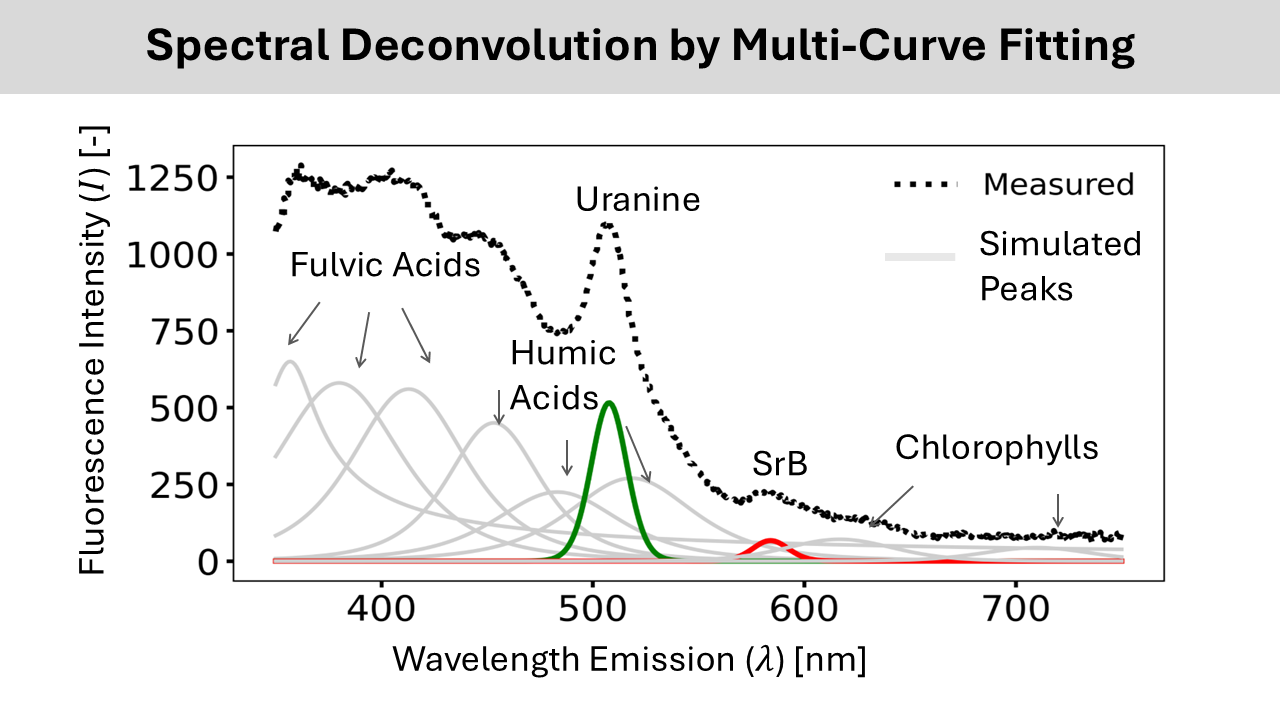
Spectral Deconvolution for Quantitative Dye-Tracing
Scientists often use fluorescent dyes to trace how water moves underground, especially in complex systems like caves (karst) or fractured rock. By tracking changes in dye concentration over time, called breakthrough curves, we can learn how fast water flows and where it travels. However, naturally occurring substances in groundwater, such as humic and fulvic acids, also fluoresce. This background signal can make it difficult to detect dyes, especially at low concentrations.
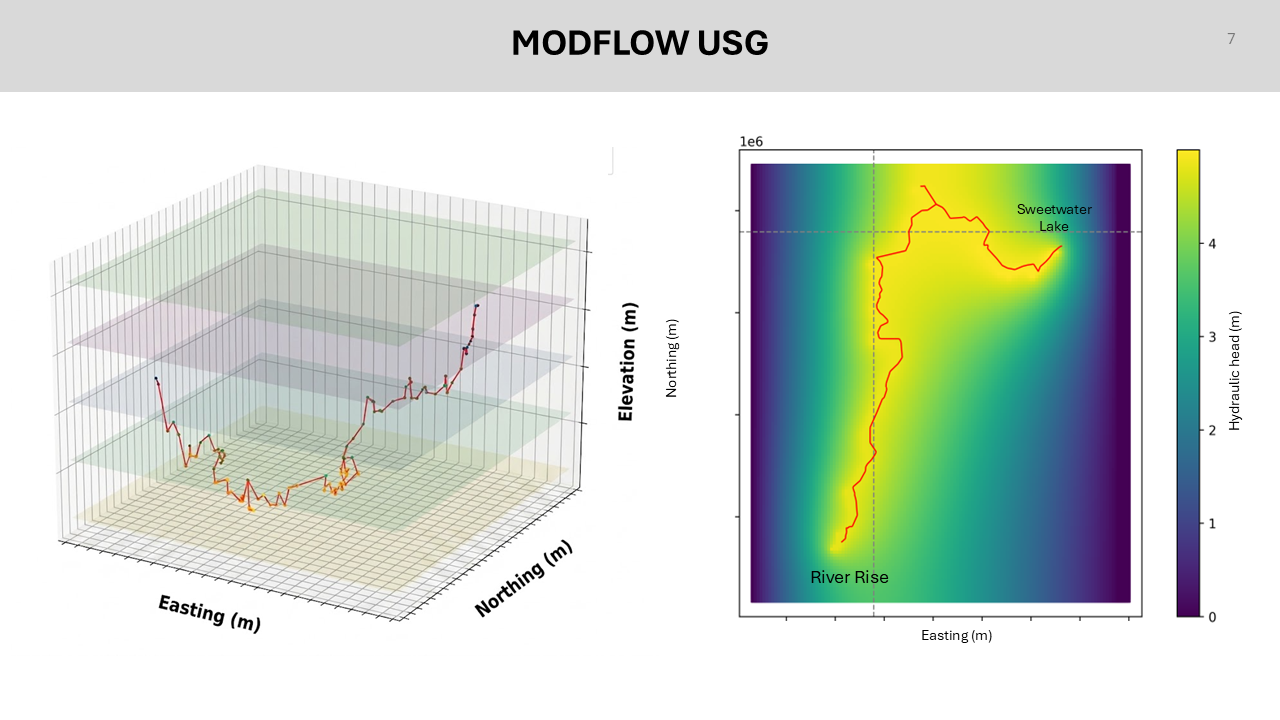
Surface Water-Groundwater Interactions on Karst Systems
Understanding groundwater–surface water interactions is essential for predicting water availability, ecosystem health, and contaminant transport in karst landscapes. My research investigates the exchange of water and solutes between aquifers, springs, rivers and lakes. Through field observations, tracer studies, and numerical modeling, I examine the processes governing flow pathways, residence times, and hydrogeologic connectivity across multiple spatial and temporal scales.
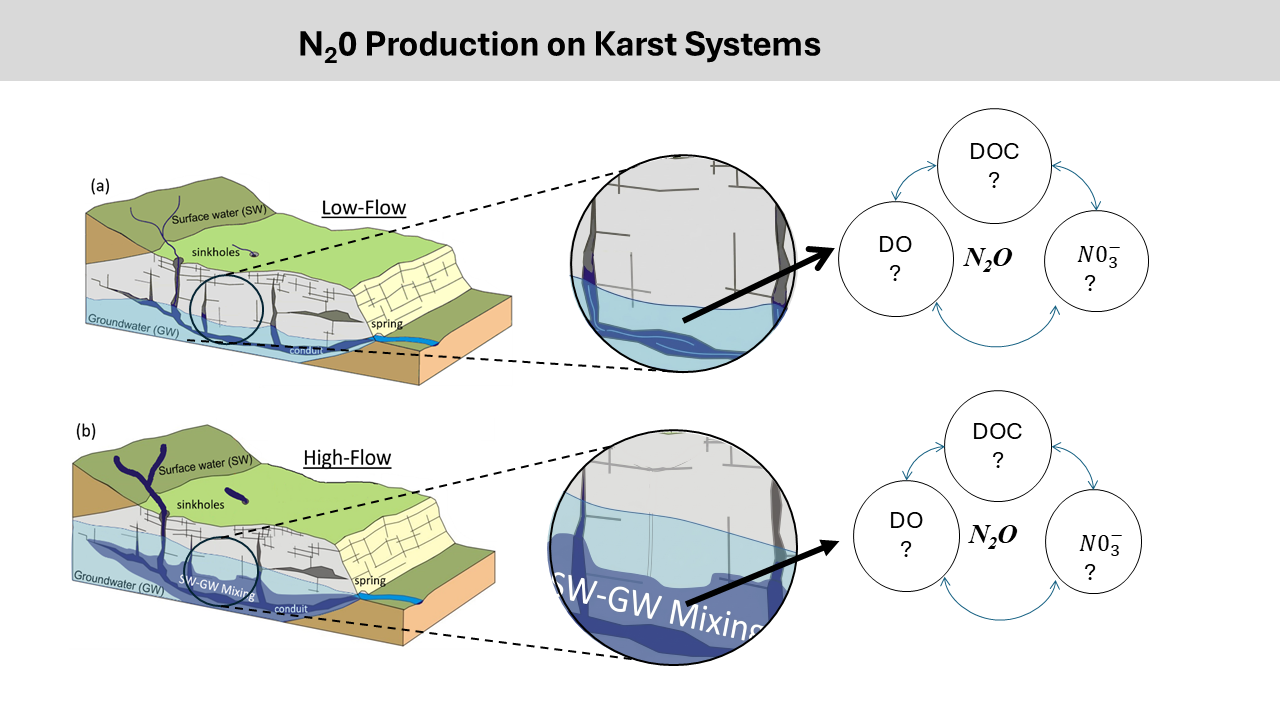
N20 Production on Karst Systems
Nitrous oxide (N₂O) is a potent greenhouse gas and a major contributor to climate change and stratospheric ozone depletion. Despite the ecological and hydrologic importance of groundwater-fed springs, the controls on N₂O production and emissions in spring ecosystems remain poorly understood. My research examines the hydrologic, geochemical, and microbial processes that regulate N₂O dynamics in karst systems. By integrating field measurements, isotopic analyses, and environmental monitoring, I seek to identify the factors controlling greenhouse gas production, transport, and release within groundwater-dominated systems.
Past Research Projects
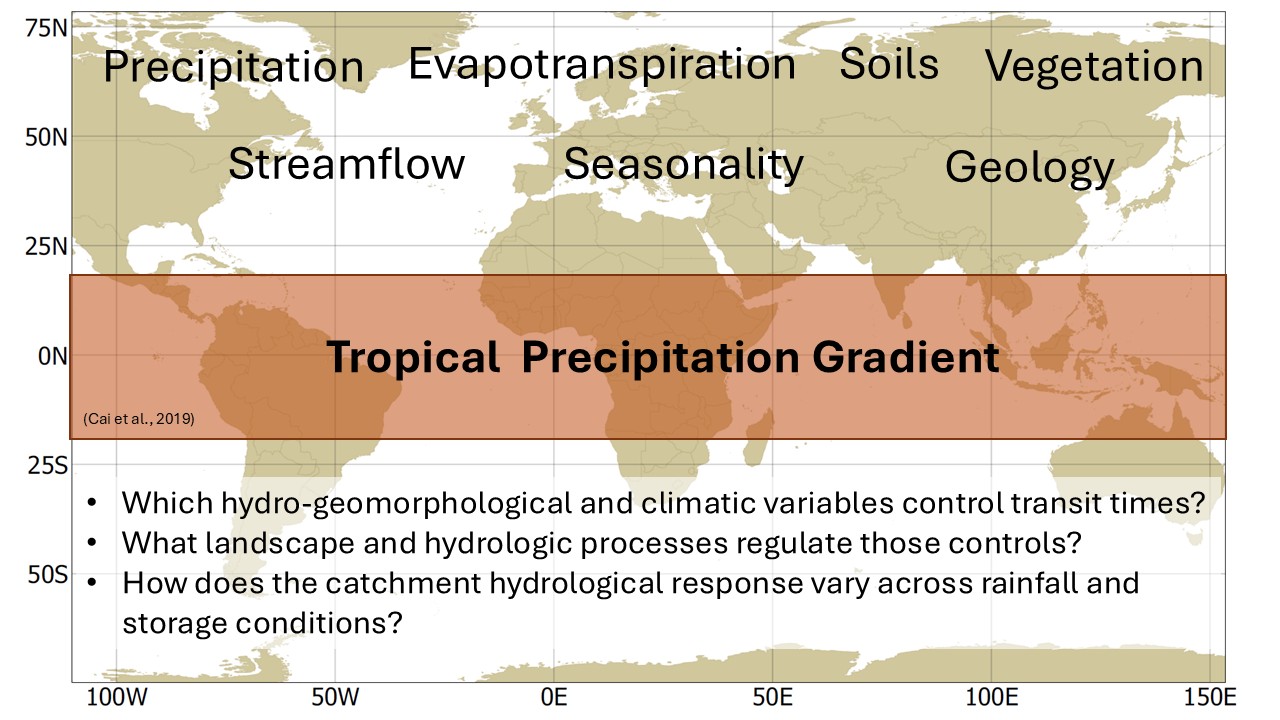
Key Controls On Tropical Transit Times
Understanding how long water remains within a watershed is fundamental for predicting water availability, contaminant transport, and ecosystem resilience. This research uses stable isotopes, precipitation, streamflow, and temperature records from tropical catchments in Ecuador, Costa Rica, and Australia to investigate the controls on water transit times. Through transit-time modeling, I evaluate how climate, topography, vegetation, and catchment storage influence hydrologic connectivity and the movement of water across landscapes.
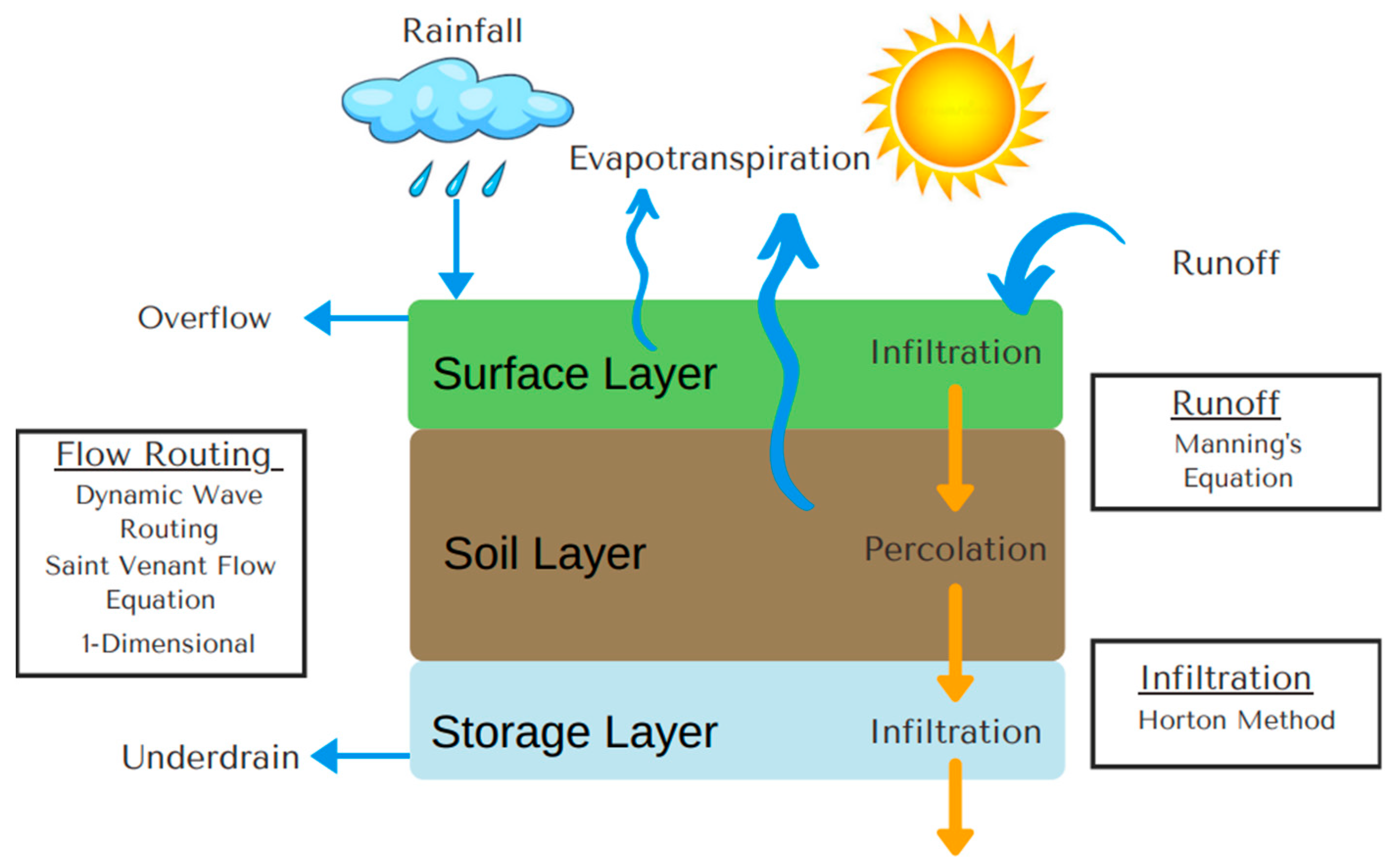
Green and Blue Infraestructe To Enhancement of Flood Resilience
Urban flooding is a major problem in many coastal cities. The rapidly shifting patterns of land use and demographic increase are making conventional approaches to stormwater management fail. The implementations of approachs with nature-based solutions help to increase city resilience and rise awarness about climate actions to reduce flood risks.